Aging in Place vs. Downsizing: The Stuff Problem Nobody Talks About
The retirement planning industry has built an entire infrastructure around two questions: Do you have enough money? and Where will you live?
But there's a third question — one that becomes urgently physical and logistical — that most people hit completely unprepared:
What do you do with everything you own?
The Aging-in-Place Stuff Problem
For the Boomers who choose to stay in the family home — and surveys suggest about 77% of older Americans prefer this — the stuff problem is one of gradual accumulation and declining management capacity.
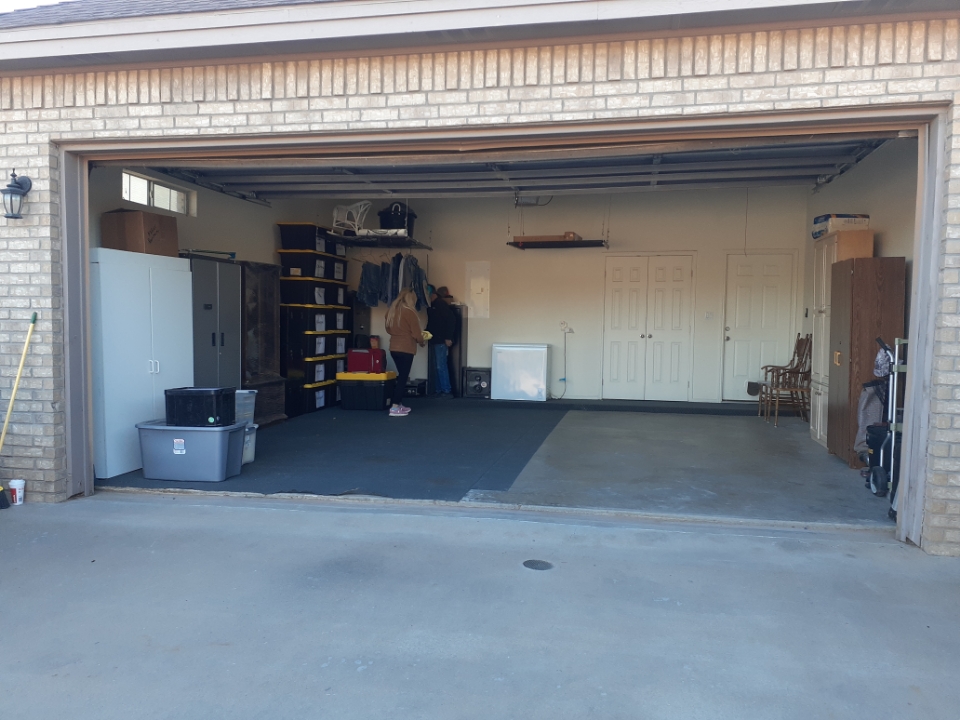
The family home was designed for a different life stage. The attic that was once accessible becomes a hazard. The garage overflows. The guest bedroom quietly becomes a holding zone for items without anywhere else to go.
Fall risk is the most serious consequence. The CDC estimates that one in four Americans over 65 falls each year. Cluttered pathways, items on floors and stairs — these are genuine hazards. Clutter is a contributing factor that rarely makes it into the official statistics but is well-recognized by occupational therapists.
Successful aging in place requires intentional, ongoing decluttering — not just a one-time cleanout, but a sustained commitment to keeping the home navigable and safe. This means annual purges of garages and attics, removing furniture that reduces walkway clearance, and transitioning from collecting to curating.
The Downsizing Stuff Problem
The average family home is 2,300 square feet. A retirement community apartment is often 900–1,400. That's a reduction of 40–60% in living space.
You cannot bring it all. Something has to go.
For many people, this mathematical reality doesn't fully land until moving day is weeks away. What gets kept? What gets donated? What goes to the kids? People in the middle of a downsizing move consistently rate it among the most difficult transitions they've ever faced — not because of the logistics, but because of what the decisions feel like.
Every Item Is a Micro-Decision About Identity
When you've lived in a home for 25 years, every object carries meaning. The couch where your children grew up. The kitchen table where decades of holidays happened. The tools in the garage that built the deck and represented a capable, active life.
The most successful downsizers approach this as a curation project rather than deprivation. You're not losing things. You're selecting what matters enough to come with you into the next chapter.
The Practical Downsizing Sequence
Step 1: Floor plan first. Know your new square footage. Only furniture that fits and that you love makes the trip.
Step 2: The sentimental sort. Before touching practical items, spend a week on photos, letters, heirlooms. Make decisions now, when you have emotional space.
Step 3: Offer family first. Give family a specific two-week window to claim anything they want. After that window, items move forward without guilt.
Step 4: Estate sale or auction. For items of genuine value, allow 4–6 weeks.
Step 5: Donation run. Habitat for Humanity ReStores, Goodwill, veterans' organizations, local shelters.
Step 6: Professional cleanout. What remains goes with the professionals. A cleanout team handles the heavy lifting, bulk items, hazardous materials, and final sweep so the home is market-ready.
The Timeline Most People Get Wrong
A reasonable timeline for full home downsizing:
- Months 1–2: Sentimental sorting and family offers
- Month 3: Estate sale if applicable
- Month 4: Donation coordination
- Month 5: Professional cleanout
- Month 6: Listing-ready
The Gift to Future You
Every decision you make today about stuff is a gift to a future version of yourself. The 80-year-old version of you will not want to navigate a cluttered garage. Will not be able to climb into a packed attic. Will appreciate a home that's calm and free of unresolved decisions.
And it's a gift to the family members who won't have to make those decisions for you. That's one of the most loving things you can do for the people who matter most.
Ready to Get Started?
Get a free, no-obligation estimate from our team today.